AI continues to drive major changes in online marketing, and it’s behind many of the top industry stories you’ll learn about this month.
In the top stories of the month, you’ll learn why some marketers are saying the internet is “banning” Google. Then you’ll find out how YouTube just altered its monetization, and what happens when AI Agents are allowed to run wild on an SEO strategy.
After that, you’ll learn about Google’s latest spam update and the impact it had on a popular type of content. You’ll also learn why YouTube no longer counts views in the same way, and what that means for your video marketing efforts.
At the end, you’ll find some of the month’s most interesting research. Find out what the latest data says about how much of the internet is written with AI, and where industry citations in LLM answers come from. Let’s jump in!
The Internet Bans Google
https://www.youtube.com/watch?v=EB6BhmoSDvI
ThioJoe brings you this look at why the internet is banning Google. Of course, by “banning,” he’s referring to the growing number of publishers who will no longer allow crawler bots. As he mentions in the video, Cloudflare is the most recent company to announce a policy.
Cloudflare has announced it will now block all major search engine crawlers used for AI training. These filters will be enabled by default for all Cloudflare customers (close to 25% of sites on the internet).
Google uses the same bots for data collection that it does for indexing sites. For now, that means any sites that choose to keep these filtering options will block indexing crawlers by default. This may affect searching and ranking and have other serious consequences for Google’s ability to deliver results.
Google isn’t the only company being targeted by the update. The policy also bans Microsoft and Apple crawlers that perform similar functions. Any multi-purpose crawlers from any source will also be blocked.
As ThioJoe mentions in the video, all of this is going down on September 15th. If you have any Cloudflare-hosted sites, you should check your settings before and after that deadline to monitor what’s changed.
Make sure you check out the video for more analysis on this update and policy. ThioJoe covers what’s really blocked, which companies are already cooperating, how much traffic this is likely to affect, and more. Next, YouTube has made serious changes to its monetization policy.
BREAKING: YouTube Just Changed Monetization
https://www.youtube.com/watch?v=VVNjAQyxOac
Sean Cannell of Think Media brings you this analysis of YouTube’s upcoming major update. In an official post last month, YT outlined three major changes that will arrive on February 1st, 2027, and affect monetization for most types of content. If you haven’t read it yet, here’s a quick cheat sheet.
YouTube Shorts Changes
Sean goes into much greater depth, exploring what these changes are likely to mean for publishers. He covers the top things you should know if you are currently using the platform as a serious income stream.
First, in some bad news for new creators, the entry bar for ad and premium revenue has been doubled. They are also adding activity requirements for YPP channels, which may make it harder for struggling channels to maintain an active status.
Sean warns you that a contract deadline is approaching and that you should handle it. The new contract covering the changes should already be available for you in the Earn tab of your YouTube Studio dashboard.
Check out the full video to learn more about preparing for this update. Next, you’ll find out if Agents are ready to command an SEO strategy. I let a few of them loose, and I’ll break down everything they were able to do on their own.
I Let AI Agents Run My SEO. Here’s what happened…
https://www.youtube.com/watch?v=0ccnRNTxwqc
I bring you this look at what’s possible with agents, featuring a live test where I let them target and address issues on a real client site in the trucking niche.
My agents overperformed, delivering nearly $`20,000 in fresh revenue for my client. Once they were in action, they surprised me with their ability to identify problems that weren’t easily detectable from analytics or clicks alone.
I learned a lot from this test, and in this video, I take you through some of the most interesting things I found. When you’re done, you’ll know how to build a money-saving agent, how to make an agent behave like an SEO expert, and how to create an agent who can detect traffic leaks.
To make this test work, I built several agents, each given specialized goals. To make sure the agents could find issues that the others couldn’t, I anticipated that I would need at least a:
 Click Gap Agent: This one hunts for pages that ranked but didn’t get clicks. The one I set up also automated the meta replacement process when that was judged to be the problem.
- Decay Detector Agent: This one detects pages that were once popular but may now be dying. This agent was tuned to catch two specific patterns: when clicks are down during a certain time window, or when impressions hold steady while clicks fall.
- Depth Scanner Agent: This one identified the weakest pages and what they were missing. It provided suggestions for major problems ranked by priority and confidence.
I take you through the specific rule sets I set for each of these agents and include all the prompts I use to develop them. Check out the complete video to learn more about how everything came together, including screen-grabs of my agent-building process.
Next, you may already be seeing the effects of being hit by Google’s August Spam update. Learn more about what this update did, what it targeted, and how you should react if your content has been penalized.
Google’s August Spam Update Just Crushed Scaled Content – SaaS Is Winning
https://www.youtube.com/watch?v=-70To9bGXVQ
Edward Sturm brings you this look at the Spam Update that arrived on August 18th, but had been causing disruptions for weeks before then. The update was announced as complete only a few days later, on the 21st.
Throughout most of last month, sites in many niches were reporting ranking swings, sudden traffic losses, and unexpected recoveries. Edward goes through all of the chatter and trends to help you understand what really changed with this update.
He identifies many signs that the scaled content was targeted directly. He explores evidence that sites publishing 500 to 1,000 pages per day suddenly lose rankings and traffic, and that the pattern of sites rapidly increasing their page count while their organic traffic falls.
The news for sites isn’t all bad. As Edward notes, there appear to be signs that sites previously hit by Google’s spam systems are now recovering. SaaS sites are doing surprisingly well, and seem insulated from the vulnerability so far.
Check out the complete video for more analysis on the spam update. Next, YouTube has changed what counts as a view, and you need to know what’s changed.
YouTube Just Changed What Counts as a View
https://www.youtube.com/watch?v=7Vql2c08Q9o
Rob Wilson brings you this look at a small YouTube update that may have big implications for the future.
On August 24th, Google quietly began updating YouTube’s view count system.
They had announced this in a support post published just a few days earlier. In that post, Google announced:
Rob goes into much more detail about what this means and how it will affect your compensation. First, it’s important to understand that while the public-facing view system now tracks every view, your participation in monetization programs will depend on “engaged views.”
According to Google, this change should not affect creators’ earnings or their eligibility for the YouTube Partner Program (YPP). Check out the whole video to understand your new view display and how to adjust your expectations for your channel moving forward.
Next, we have the first of a couple of data studies you won’t want to miss. The first one asks, how much of the internet is written with AI?
How Much of the Internet Is Written With AI?
https://www.pewresearch.org/data-labs/2026/08/20/how-much-of-the-internet-is-written-with-ai/
The Pew Research Center brings you this look at how much of the internet is written with AI. To explore the question, the research team used an existing web archive to collect almost half a million English-language webpages from the past five years and organize them by authorship.
The team scanned the text of those pages using an AI detection tool called Open Pangram to determine how many were likely written or substantially edited by AI. This tool looks for patterns in language, identifying words, phrases, and other elements that AI uses more often than human authors.
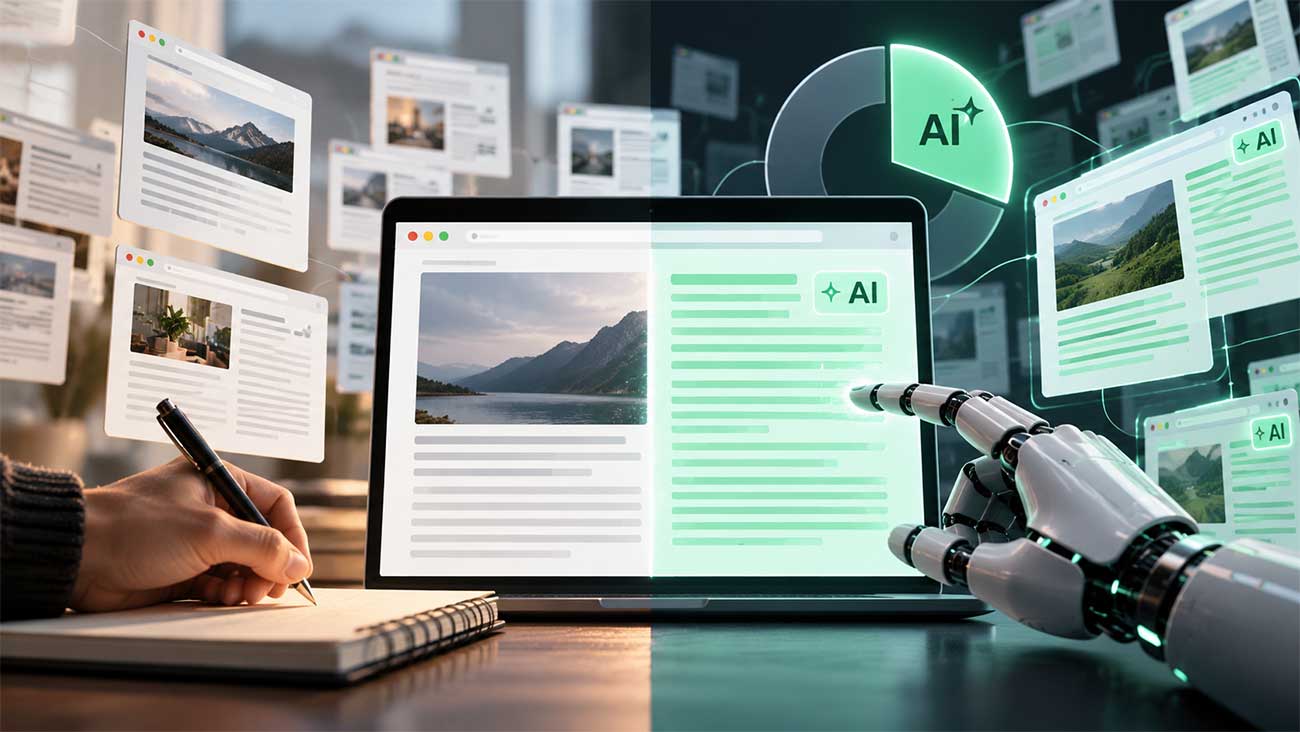
The results showed 10% AI authorship across the half-million pages used for the test. However, the researchers stress that this test covered content built during several years when AI was not widely available. A lot of pages in these random samples couldn’t have been written by AI.
When the team filtered the results to exclude outdated webpages and considered only pages published after ChatGPT’s release, the trend was more pronounced. In the July 2026 snapshot, signs of AI authorship can be found on over one-third of pages published after ChatGPT’s release.
Check out the complete study to learn more about how AI authorship is detected and what the numbers say about the future of content. In the next study, you’ll learn who AIs really prefer to cite based on a comprehensive study.
We Analyzed 107 Million AI Answers. Here’s Where Each Industry’s Citations Actually Come From
https://www.searchenginejournal.com/ai-search-citation-sources-trendos-spa/586289/
Gintare Rimolaityte brings you this look at what hundreds of millions of AI answers can tell you about getting cited. The team organized these answers by industry (IT services, consumer goods, and communications services) and compiled the top 10 sources cited for each.
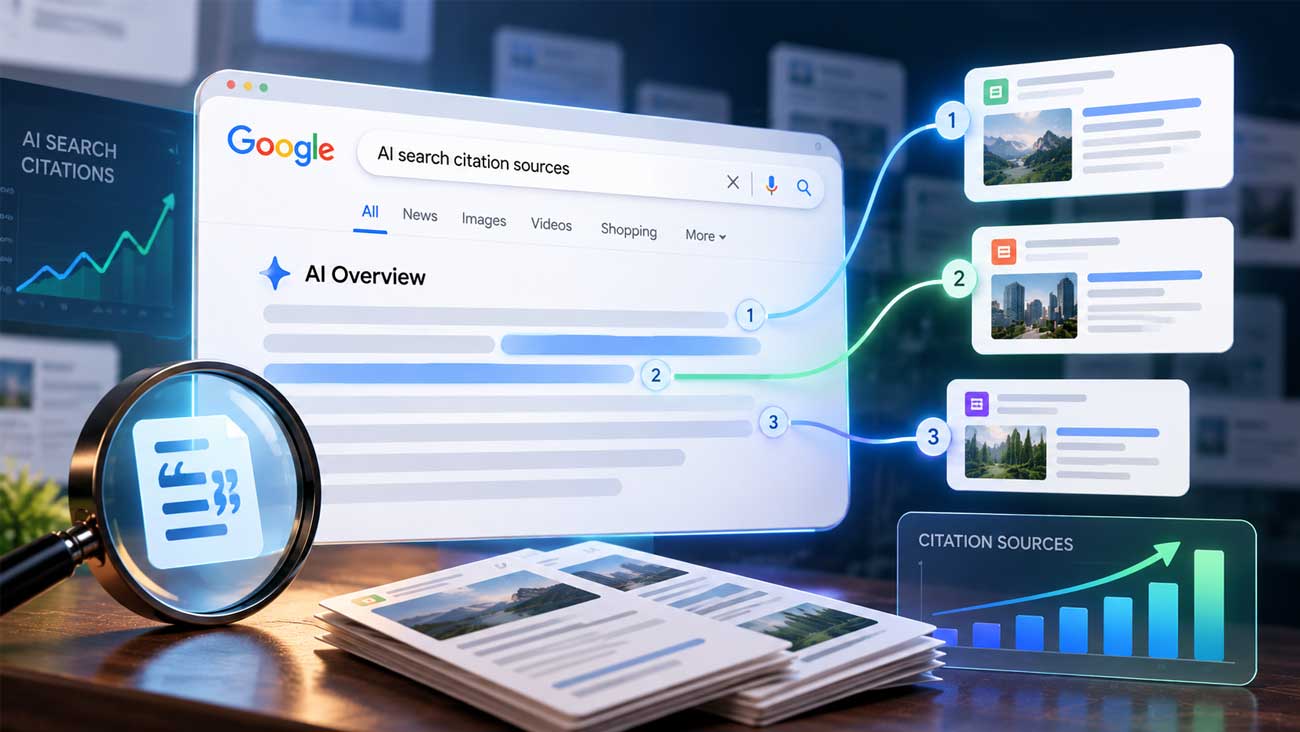
They found that citations vary significantly across industries. For example, most industries are equally likely to get citations from user-generated content. However, the consumer goods industry is far more likely to get brand citations, and IT is far more likely to get editorial citations.
These categories are broken down completely so that you have an understanding of what kind of citations you need to seek for your own industry. You’ll get a list of the different sources that appear for each category of citation and find out whether your best bet is to chase Reddit, YouTube, Wikipedia, or something else.
Check out the complete study for more up-to-date numbers on citation sources and advice on building now. That’s all for the roundup this month. Come back next month for more of the latest headlines on online marketing, along with the data that makes it all make sense.
