
The last few weeks have been big for search, paid advertising, and all forms of online marketing. You need to keep up to stay competitive, and we’ve got all the insights you need.
In our top pieces for the month, you’ll build a foundation for “AEO” success in less than 20 minutes. Then, you’ll learn about everything that changed in Google Ads’ new bidding update and find out why Google may be deleting your reviews even if they’re legit.
After that, you’ll get an update on how many clicks AI features are sending to sites, learn how ChatGPT’s fan-out queries have been evolving, and see the results of testing all of Instagram’s monetization features.
Stick around until the end to find out more about newly announced changes to Google Ads appeals, and discover what changes Google may be making to respond to massive potential fines in the EU. Let’s jump in!
Learn 80% of AEO in 19 Minutes
https://www.youtube.com/watch?v=58MR03s0ev8
Sam Oh brings you this look at the new practice of Answer Engine Optimization (AEO). The team has condensed one of their most comprehensive videos on the subject into an explanation that covers all the most important parts in fewer than 20 minutes.
In the video, you learn how AI search really works with full diagrams that help you understand what you’re targeting. As Sam shows you, optimizing for AI requires ranking for query fan-outs rather than simple head terms. He gives you the process for making yourself relevant to agents.
Sam also lays out the specific levers you need to pull to get picked over your competitors. You’ll find out how you can leverage agreement across the web, fresh content, and traditional authority.
The video will also help you figure out where you stand right now. You’ll learn how to build a brand gap analysis (if you use Ahrefs) and the principles you need to apply to create this analysis with other popular tools.
The video closes with a condensed section on earning citations at scale. You’ll find out where to start building branded citations first, including on sites like Reddit, Quora, and YouTube. There’s even some advice on how to avoid silent blockers that are stopping your brand from spreading.
Check out the entire video to get started on building an AEO foundation for your brand. Next, serious changes have been made to Google Ads bidding. Make sure you know what’s changed before your next campaign.
NEW Google Ads Bidding Update (Act Before Aug 17)
https://www.youtube.com/watch?v=ByKmbyQrD7Y
Austin LeClear brings you his breakdown of a recent big change to how Google Ads handles bidding. You can find the original announcement here. Google summarized the changes near the end of the announcement:
However, Austin thinks there’s more to this change, and his video goes into detail on what’s happening and how you need to respond. He shows you what’s changing, explains why it’s likely to result in a price hike in most markets, and offers recommendations for updating your campaigns.
He explains that the old bidding algorithms aimed to achieve the cheapest possible conversions within your set budget.
This change means that overperformance will be much less likely, and Austin provides several examples from real campaigns to illustrate how this will work.
Check out the complete video for a step-by-step explanation of what you need to change. While he recommends these changes before Aug 17th, that’s only to prevent unoptimized spending. You can still make all the changes he recommends to keep your future costs under control.
Next, you may have lost good reviews recently. Learn why, and how to stop it from happening again.
Google Is Deleting Your Reviews (Even If They’re Legit)
https://www.youtube.com/watch?v=86I20c0QeP4
Caleb Ulku brings you this look at why Google has been on a spree of deleting reviews, and why some legitimate ones are likely getting caught in the crossfire. The businesses affected are being hit hard, with at least one losing over 3,000 reviews in 24 hours.
The mechanism that is causing this may be Google’s own automated systems. Caleb believes that these automated processes are responding to review spam with sweeping overreactions. This seems to be why reviews are disappearing and why some businesses can’t accept new reviews.
As he reminds you, reviews play a significant role in Google’s new AI Search systems. These reviews provide the context your brand needs (including signals that indicate your services, hours, and capabilities), and now is a particularly bad time to lose them.
Google claims you can get them all back once they’re verified, but they don’t provide any timelines or explanations for why individual reviews were removed. Caleb argues that there is a pattern and that you can protect yourself with some simple steps.
Caleb recommends that you assess your Google Business Page. You should record your number of reviews and rating right now so that you’ll know your baseline if anything gets removed.
He recommends preparing for the future by requesting more specific reviews from your customers, noting that general, low-effort reviews are the most likely to be targeted. Next, new numbers are out on how searchers are using Google’s AI tools and whether your site can benefit.
Google: We Send Billions Of Clicks To Websites Weekly Through AI Search
https://www.seroundtable.com/google-ai-search-billions-clicks-41709.html
Barry Schwartz brings you this look at the state of Google’s new AI Mode and AI Overviews. Google has announced in a recent report that it is sending billions of clicks to websites each month.
These numbers follow months of criticism from site owners, who argue that Google has captured more clicks for its own services and content than ever before with the introduction of the new AI features.
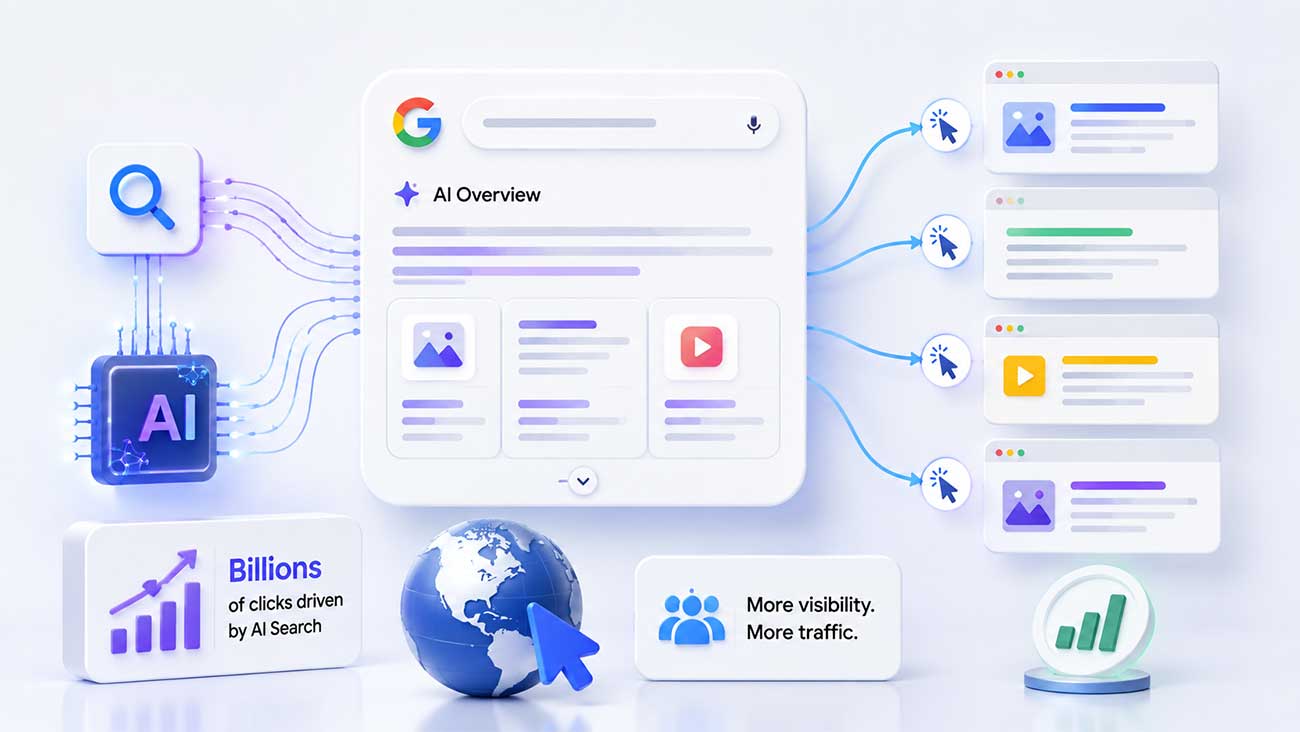
As Barry points out, “Google is not saying it sends more clicks to websites than it did before; rather, Google is saying it still sends billions of clicks and that AI Search features send billions of clicks weekly.” He surfaces some fresh research showing that Google is currently sending fewer than 30% of clicks.
Unfortunately, Google doesn’t currently allow you to see these numbers for yourself. The AI performance reports you’ll find in the search console do not include click-through rates, so you won’t be able to see how many viewers AI is sending you.
Barry gives them some credit. It can be said that Google has made efforts to increase clicks through preferred sources, top stories in AI Overviews, recipe improvements in AI search, and other link improvements in AI features.
Check out the rest of the article to learn more about how the discussion is developing. Next, recent research and analysis show how ChatGPT’s fan-out queries have evolved.
What We Can Learn from Evolving ChatGPT Fan-Out Queries
https://lilyraynyc.substack.com/p/what-we-can-learn-from-evolving-chatgpt
Lily Ray brings you this comprehensive take on how ChatGPT may really work. As she summarizes at the top of her in-depth analysis:
This is a complex take, but she reinforces her argument with a lot of recent industry data, along with data she collected by tracking ChatGPT with a combination of Peec AI, Profound, the Resoneo plugin, FanoutFox, and more.
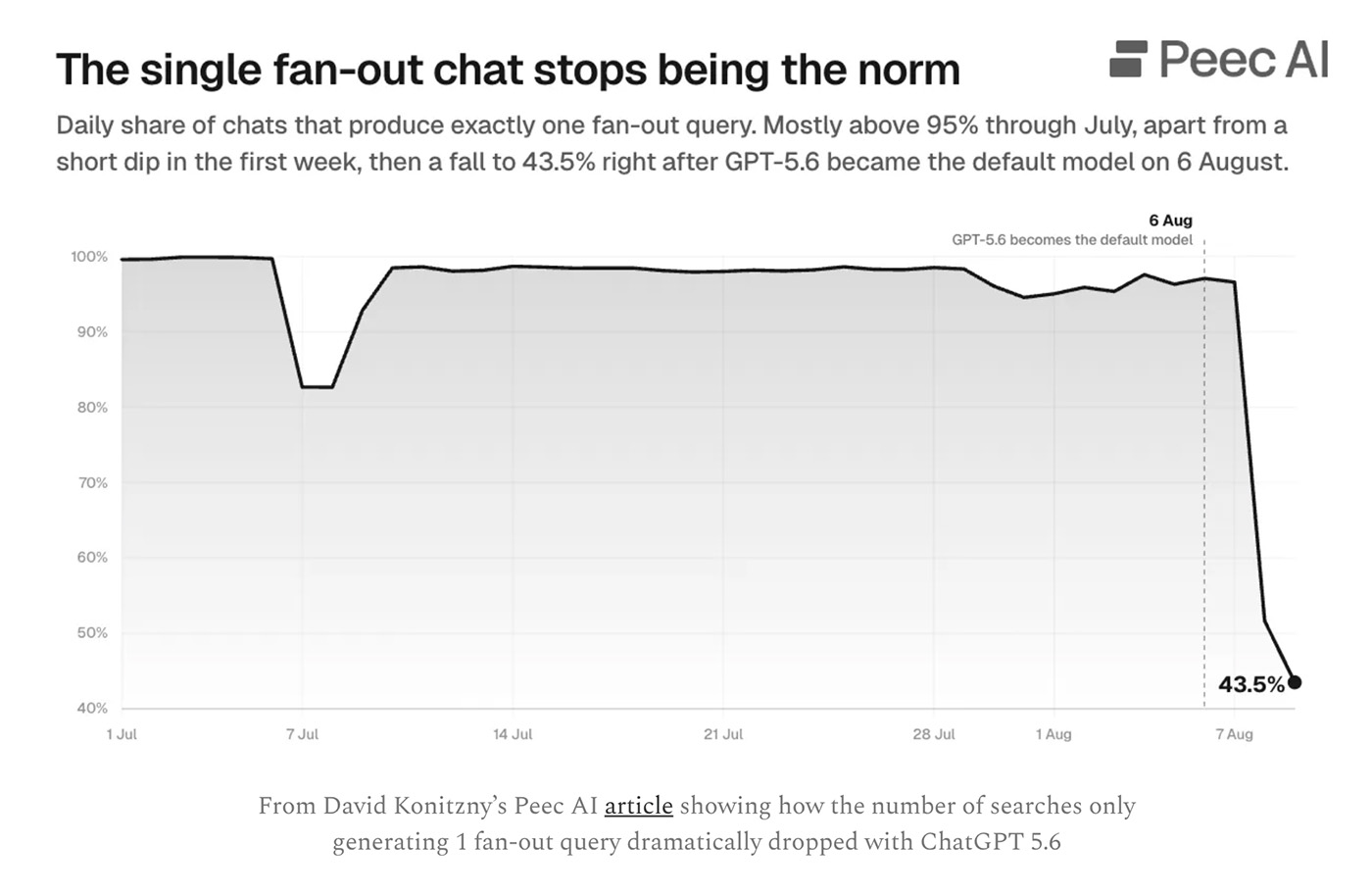
She used Peec AI and Profound to generate fan-out queries for tracked prompts, while the free Resoneo plugin and FanoutFox were used to surface the queries the model ran and the sources it pulled from. Using this data, she was able to spot several patterns.
She argues that the site: operator mentioned above is functioning (at least in part) as a spam filter. Once ChatGPT has narrowed down the search, pure facts tend to go to a given brand’s domain, health and legal questions tend to go to .gov sites, and so on.
Check out the complete write-up for one of the most comprehensive looks at how fan-out queries work yet. Next, find out the best options for monetizing on Instagram.
I Tested Every Instagram Monetization Feature for 30 Days
https://www.youtube.com/watch?v=Tgb0DjM_hvY
Karl-Friedrich Verna and the HubSpot team bring you this simultaneous test of all of Instagram’s monetization features. They analyze each of them for 30 days to find out which actually pays.
The social media site has developed many on-platform monetization schemes if you haven’t used it recently. You can monetize through gifts, badges, subscriptions, and bonuses. Karl-Friedrich takes you through each one and how they performed on the test.
He doesn’t recommend “gifts,” the first option explored in the test. It’s one of the easiest to qualify for, but it sends you a single cent per action. Karl-Friedrich takes you through the math and shows you why that won’t work out for most creators.
You’re likely to have problems with the badges and subscriptions feature if you’re still trying to earn with a small or medium-sized audience. You’ll need to be live to earn badges, and you can’t even use the subscription feature until you have 10,000+ followers, though larger accounts are capable of earning 10s of thousands of dollars.
Keep watching to learn more about building a foundation (reach, engagement, and lead capture) you need for these features to earn you real money. In the next piece for the month, Google Ads is limiting appeals to 6 months.
Google Ads Appeals Limits Set To 6 Months
https://www.seroundtable.com/google-ads-appeals-limit-41730.html
Barry Schwartz alerts you to a small change in Google Ads that could have significant consequences if you have many active ad campaigns.
In the update found here, Google announced that starting July 21, 2026, the option to appeal a policy decision directly from your Google Ads account will not be available for policy decisions made more than 6 months prior.
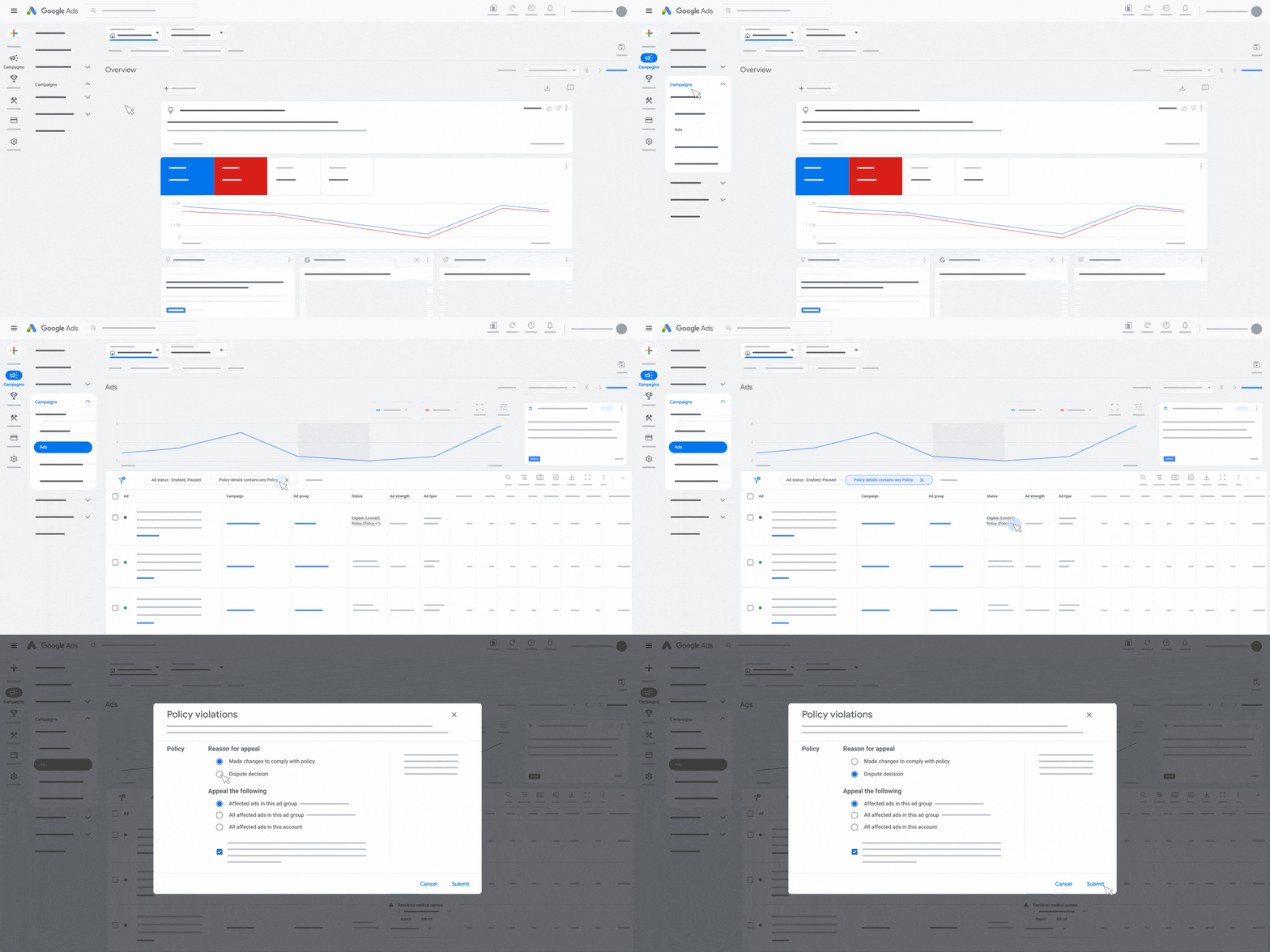
That means if your ads or text have been disapproved and stopped from running, you will lose the ability to contest the decision within six months. All violations that are more than six months old can no longer be appealed.
Barry shares some of the chatter this change is generating in the PPC community. Some PPC experts are reporting that additional small changes were introduced with the update, including the removal of several options from the appeals menu.
Check out the complete article to learn more about how this change may affect your campaigns. Next, Google may be facing huge fines, which could mean future changes for Search.
Google hit with $1 billion EU fine, in ‘constructive’ talks to avoid more penalties
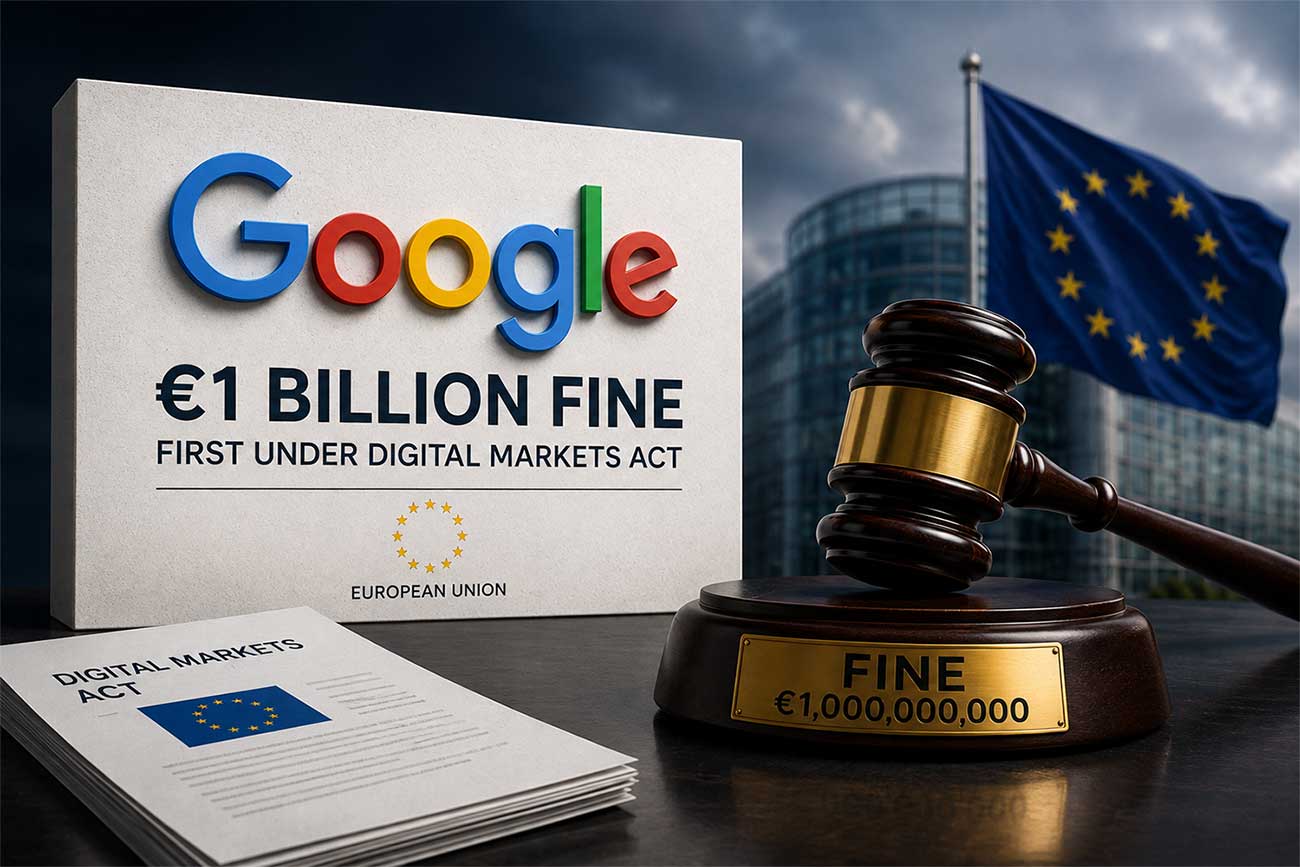
Reuters brings you this look at the fines Google is facing in Europe and how they may affect the search engine and its algorithms in the future. In the most recent round of cases, Google was found responsible for two major fines. As Reuters reports:
A fine of €460 million was imposed under the Digital Markets Act for favoring its own services in shopping, hotels, transport, and sports results in search results.
A second fine of €430 million targeted Google’s restrictions on its app store, Google Play, preventing app developers from steering users, free of charge , to cheaper offers on rival app stores or websites.
While Google is complying with these rulings, it claims that doing so will hurt customers in the EU. They argue compliance will require them to strip away popular Search Features like instant pricing and availability for hotels and flights.
This may not be the end of the story. In the United States, the Trump administration is accusing the EU of targeting U.S. companies. He is threatening to raise tariffs against the EU in retaliation. For now, Google is cooperating, but if this story shifts rapidly, you’ll be able to read about it in a future roundup.


