Catch up now on all the biggest online marketing stories of the last month. In this month’s edition, you’ll get a mix of new research, major announcements, and in-depth analysis.
In the top marketing stories of the month, you’ll see the results of a huge LLM study, get advice from an SEO pro on how to start over with a new website, and explore an expert’s perspective on the (new) real source of topical authority.
The last month was also marked by earth-shaking announcements from the giants of online commerce. Google, OpenAI, and Meta all released statements that you’ll want to catch up on if you work with these platforms in any way. You’ll find them all here.
At the end, you’ll find some thoughtful analysis and think pieces. The first claims that social media is “over,” and the second breaks down what Google revealed about key systems in a recent court case.
What 2 million LLM sessions reveal about AI discovery
https://searchengineland.com/2-million-llm-sessions-ai-discovery-468115
Jordan Koene brings you this analysis of nearly 2 million LLM sessions his team tracked across 9 industries during a study that ran from January to December 2025. The team examined how several assumptions, including ChatGPT’s supremacy, held up against the results.
First, they found that ChatGPT is facing stiff competition, with some competitors growing much faster. For example, ChatGPT grew by 3x over the course of the study, but competitor Copilot grew 25x while Claude grew 13x.

In particular, Copilot appeared to rule wherever work is happening. The growth it achieved in the example above seemed possible because of its expansion in B2B verticals such as SaaS, Education, and Finance.
The team also identified niches where other LLMs are growing. Perplexity is one of the smallest LLMs, but it has an outsize influence on the Finance vertical. Jordan theorizes this may be because Perplexity is more committed to providing citations to users who need verified facts.
Additionally, the team found that Claude was fast becoming the favorite LLM for strategic thinking, research, writing, and analysis. This LLM achieved massive growth with the publisher and education verticals.
Check out the complete study to learn what LLM traffic can tell you about where to target your audience. Next, you’ll get some advice on how to direct traffic to new sites from the Ahrefs team.
How I’d Get Traffic to a New Website if I Had to Start Over (2026)
https://www.youtube.com/watch?v=Qs_p21vLp1A
Sam Oh brings you this look at how the basics of traffic generation have changed. In this video, he generates the playbook he would use to create a successful site if he had to start over today.
First, he assures you that new sites are not doomed, though they may face a tougher fight than older ones. There are still straightforward steps you can follow before you have to start the tougher work.
The steps for early sites haven’t changed much. You’ll need to implement a discovery plan so that both bots and human customers can find you. This step will involve submitting your site to targeted directories and hubs. Sam breaks down how to find the right ones and get the most out of them.
In the final part of the video, you’ll learn the new methods that are used for drawing users back to your site. Sam discusses ways to build a site community by engaging with forums, forming partnerships, and more.
Check out the full video to get more tips about what it takes to grow a new site. Building topical authority is also a challenge for new sites, and the next piece of the month argues the rules may have changed.
Topical Authority Isn’t Blog Posts – It’s This
https://www.youtube.com/watch?v=8DuIlUdfY_w
Edward Sturm does not believe that topical authority comes from publishing blog posts. In this video, he argues that many SEO strategies fail because they buy into this myth, and that they need to adopt a new understanding of how this authority is measured and built.
He starts by sharing a Reddit comment from a fan who shares their experience with revamping their SEO department. The comment discusses exhaustion with recommending “blog posts” to clients, where blogs aren’t influential in the niche.
Edward agrees that blogs aren’t always, or even often, the best answer for topical authority. He highlights several alternatives that appear in the Reddit thread, including links, brand mentions, and bottom-of-funnel pages, public relations actions, forums, reviews, and more.
He backs up his arguments throughout the video by referencing case studies, such as what happened to HouseFresh.
HouseFresh is a company that eliminated its SEO spending after being hit by a penalty. They marketed through all other means until they were so widely referenced that Google was forced to recognize them again. It’s an amazing example of how topical authority is possible without SEO.
Check out the complete video for more theory on how topical authority really works and how some of the biggest sites are building their topical authority in unconventional ways. Next, you’ll explore the first of several big announcements. The first one involves OpenAI’s advertising policy.
(OpenAI Announcement) Our approach to advertising and expanding access to ChatGPT
https://openai.com/index/our-approach-to-advertising-and-expanding-access/
OpenAI has announced that it will begin testing ads inside ChatGPT. This is a big shift for the company, which has provided an ad-free experience since it launched in 2022.
According to the statement they released, the ads will allow the LLM to reach wider audiences and offer “fewer usage limits or without having to pay” as it expands to more countries. Currently, the ads will only appear for Free and Go subscription users.
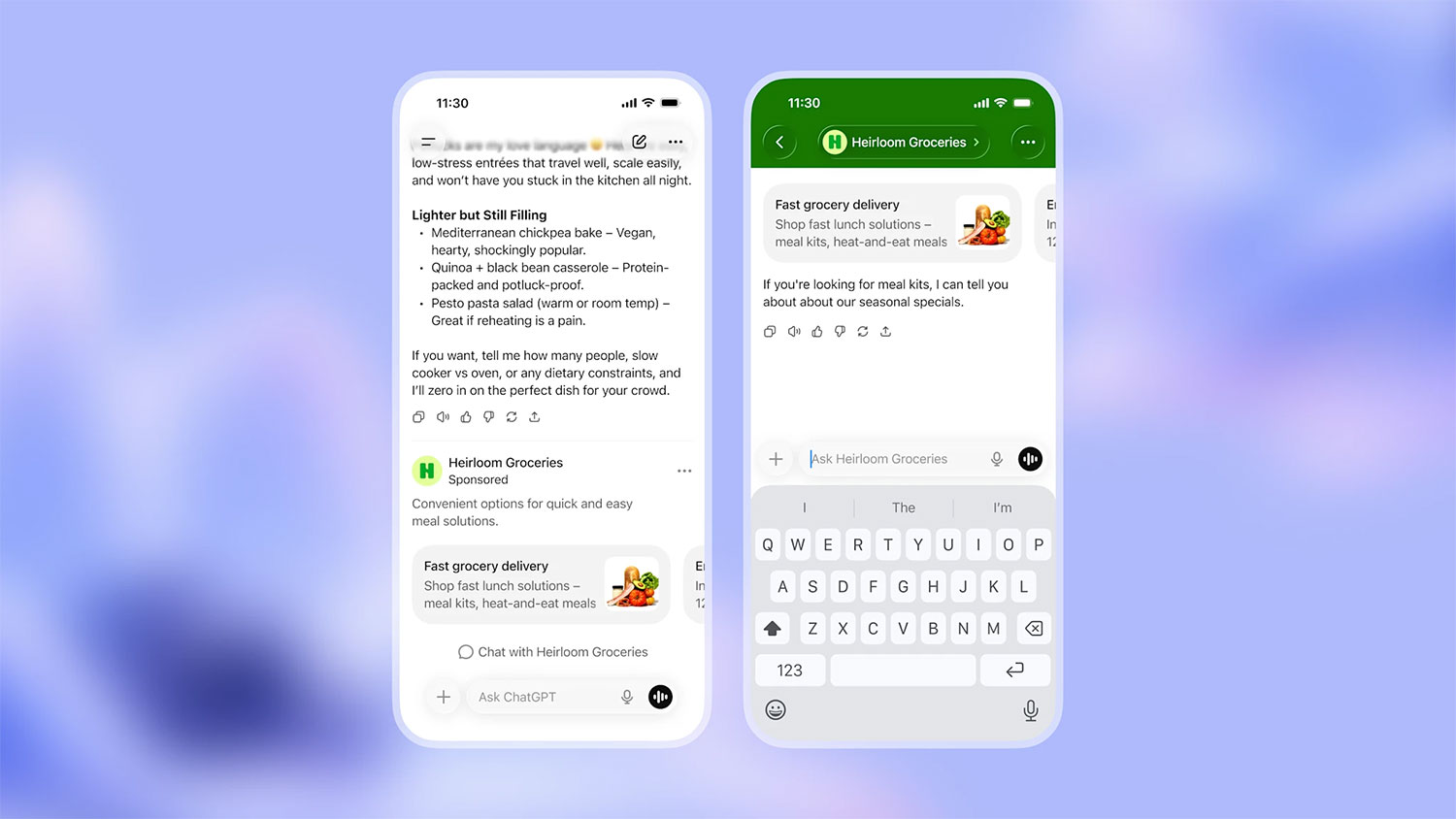
The statement takes some time to address ChatGPT fans who may be bothered by the news. OpenAI lays out the principles that will be guiding the use of ads, including—
 Mission alignment: Our mission is to ensure AGI benefits all of humanity; our pursuit of advertising is always in support of that mission and making AI more accessible.
- Answer independence: Ads do not influence the answers ChatGPT gives you. Answers are optimized based on what’s most helpful to you. Ads are always separate and clearly labeled.
- Conversation privacy: We keep your conversations with ChatGPT private from advertisers, and we never sell your data to advertisers.
Despite the careful language of the statement, the reception has been mixed. Users have accused OpenAI of abandoning their first principles, and if you were watching the American Super Bowl, you would have seen Anthropic sponsor a nationwide ad mocking this policy.
Marketers should know that these ads cannot be purchased yet. Instead, they will be test ads to measure attention and reception. After this one, the next announcement from Google got the most attention of the last month.
(Google Announcement) Our approach to website controls for Search AI features
https://blog.google/products-and-platforms/products/search/search-ai-features-controls/
Google has announced that it is exploring ways to let some websites/publishers opt out of being scraped for content by Google’s AI features. The move comes in response to the EU’s Competition and Markets Authority (CMA) proposal for improvements.
As a quick refresher: In 2025, the CMA designated Google with a status that allows the CMA to introduce targeted rules or ‘conduct requirements’ for Google’s business. The CMA published a roadmap of possible measures it might take in June 2025, including publisher controls.
Now, it seems Google may be acting on the CMA’s advice and moving forward with new protections for publishers. The changes are supposed to give you more power over how your site is used for featured snippets and other search features.
The announcement provides few details, other than to say that sites will soon have the freedom to opt out entirely. Google has not yet provided details on how it will comply with other CMA recommendations on fair ranking and data portability. There may be more news on that later.
Meta wouldn’t be left out of the big announcement drops, so they issued their own covering how their ad policy is working and changing one year in.
(Meta Announcement) Ads on Threads: One Year In
https://www.facebook.com/business/news/ads-on-threads-one-year-in
Meta released this announcement covering its first year of advertising and letting its advertisers know what to expect going forward. You’ll be updated on the new, larger rollout, the work on options to reach users, and an avalanche of new ad formats, controls, and features.
First, Meta confirms that ads are now launching globally, and advertisers will be able to compete for all of the network’s 400,000,000 active users. This rollout will continue over the next few months, with ads appearing gradually at first and then more often.
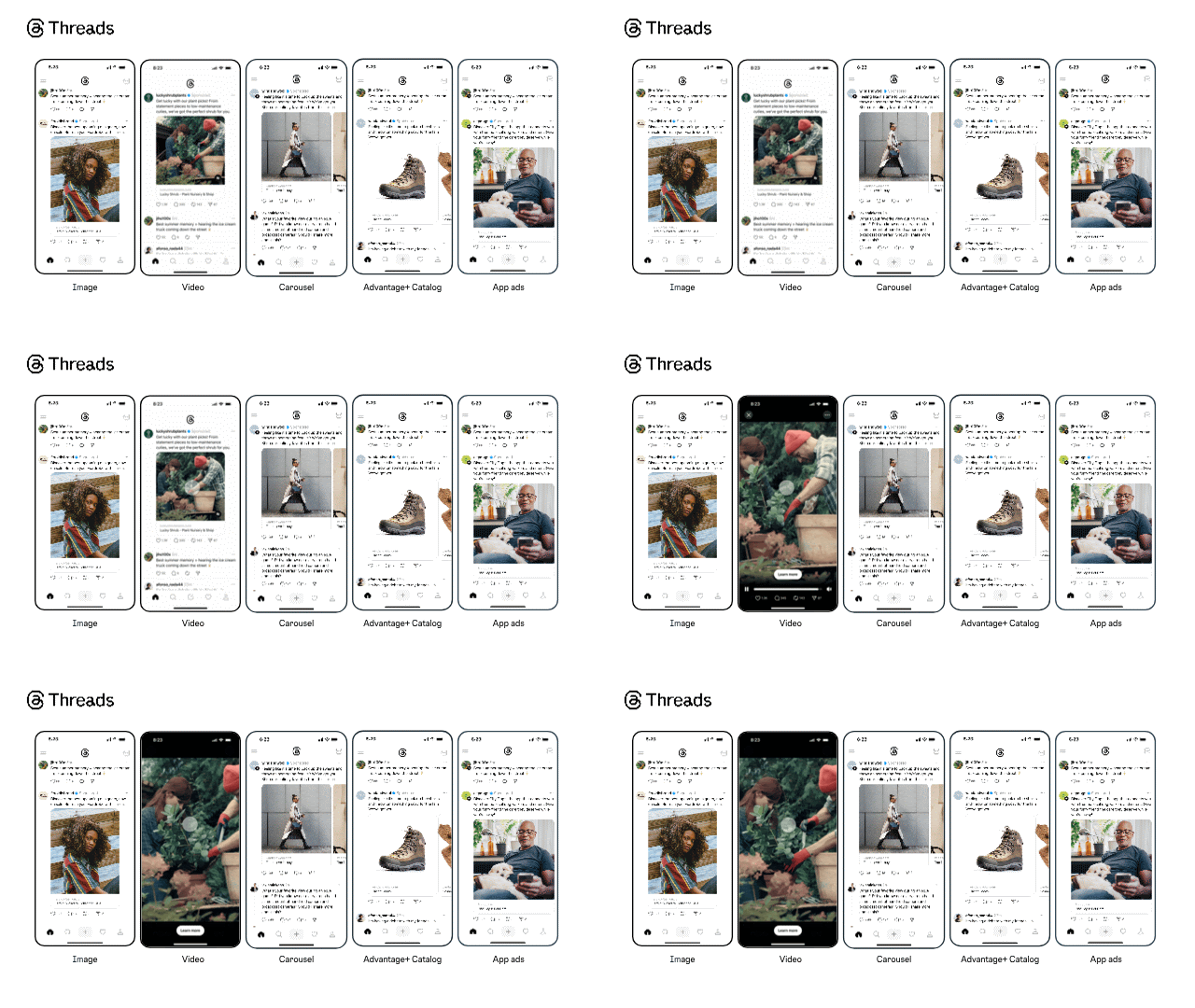
Many new options and tools are coming too. Threads ad settings can now be managed alongside ad campaigns for any other property, like Facebook and Instagram. You’ll also get access to more ad formats, including the newly added carousel format.
The company also expanded third-party verification, already available on Facebook, Instagram, and Reels, to the Threads feed via Meta Business Partners. This new feature will provide independent brand safety and suitability verification for Threads feeds.
That covers the big announcements for the last month, but there’s still more news you shouldn’t miss. Consider why one major social media advertiser says the whole thing is over.
Social Media is Over, Here’s What Will Grow Your Business
https://www.youtube.com/watch?v=7pKRGZYyy9Y&t=102s
Sunny Lenarduzzi explains her process of growing her business after nearly completely withdrawing from social media, and why she considers it a drain on resources for most businesses.
First, she identifies what she thinks works and doesn’t, and starts by explaining “push & pull marketing”. Push marketing involves seeking out your audience and targeting them with constant posting and peppering for engagement. Pull marketing involves accommodating people who are seeking you with longer, deeper content.
Sunny argues that push marketing doesn’t work well for a number of reasons. For example, many people have become resistant to any intrusive marketing. Also, Sunny argues, long-form content is a lot more difficult for copycats to steal.
She recommends forming what she calls a “triangle of trust” with your target audience and reinforcing your approach by knowing who needs your help, what they want, and how to help them. With this approach, you can control the algorithm rather than being controlled by it.
Check out the whole video to get her complete analysis, including her 10-year strategy for becoming an authority. In the last piece of the month, you’ll get a look under Google’s hood thanks to a recent court case.
What the DOJ Trial Revealed About Google’s RankEmbed BERT System
https://www.youtube.com/watch?v=mYwU1eyUm3s
Marie Haynes brings you this look at how search really works, including some revelations from Google’s DOJ trial that discuss the hidden RankEmbed systems. She argues based on this and other data that user satisfaction is now one of the most important signals.
First, she gives you some background on the Quality Rater Guidelines and how they helped her develop her theory. This important doc explains the instructions that Google gives to its own human raters, and is a good indication of what matters most to them. She argues this doc contains clues that are even more important when you know how Google really works.
Marketers got a chance to see how Google works when the company was forced to release documents and provide testimony in its monopoly trial. RankEmbed BERT was one of the “secret” systems that was discussed.
Check out the full video for some intense analysis of the trial documents and testimony. You’ll learn more about deep-learning training, the real role of the most recent content updates, and how it’s been driven by AI re-ranking.
Watch for more news on this breaking story in future roundups!


